The information on this website is general in nature and does not take into account your objectives, financial situation, or needs. Consider seeking personal advice from a licensed adviser before acting on any information.
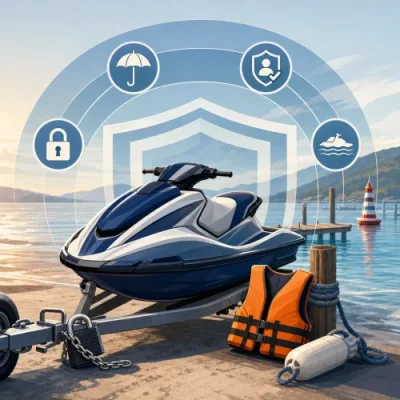
Jet skis and other personal watercraft have distinct insurance considerations, including theft risk, liability exposure, storage conditions, rider experience and policy limits. This guide explains what Australian PWC owners should check before choosing cover.
Personal watercraft insurance in Australia is designed for jet skis and similar powered watercraft, but it is not simply a smaller version of standard boat insurance. PWCs are fast, portable, often stored on trailers and commonly used close to other vessels, swimmers, jetties and shorelines. Those factors can affect the type of cover available, the questions insurers ask and the policy conditions owners need to follow.
This guide explains the main risks, cover types and policy conditions Australian jet ski and PWC owners should understand before comparing options. It is general information only and does not take your objectives, financial situation or needs into account. Policy availability, pricing and terms depend on the insurer, the watercraft, the rider and how the PWC is used.
How personal watercraft insurance differs from general boat insurance
A personal watercraft is usually smaller than a cabin boat or fishing boat, but it can create a different risk profile. Insurers may look closely at how the PWC is ridden, who is allowed to use it, where it is stored and whether it is used for towing, racing or other higher-risk activities.
For broader marine cover context, you can compare the general information on boat insurance and marine cover, but PWC owners should also check jet ski-specific conditions rather than assuming all boat policy features apply in the same way.
Common PWC-specific considerations include:
- Higher theft exposure: Jet skis are relatively portable and may be targeted if stored on trailers, driveways or unsecured pontoons.
- Close-contact use: PWCs are often operated near other craft, swimmers, ramps and shore structures, increasing the importance of liability cover.
- Multiple riders: Friends or family members may ride the PWC, but the policy may restrict who is covered or apply conditions based on age, licence status or experience.
- Towing activities: Some owners tow inflatables, wakeboarders or skiers, which may need to be disclosed and may be subject to special conditions.
- Trailer and storage risks: Damage or theft may occur while the PWC is being transported or stored, not only while it is on the water.
What jet ski insurance may cover
Cover varies between insurers and policies, so it is important to read the Product Disclosure Statement, policy schedule and any endorsements. In general, PWC insurance may include some or all of the following areas.
| Cover area |
What it may help protect against |
What to check carefully |
| Accidental damage |
Damage to the PWC from an insured accident, impact, collision or similar event. |
Whether cover applies on water, during launch and retrieval, while trailered and while stored. |
| Theft |
Theft of the PWC, trailer or insured accessories. |
Security requirements, storage conditions, lock types and evidence needed for a claim. |
| Fire, storm or malicious damage |
Damage from specified insured events. |
Weather exclusions, storage obligations and whether the PWC must be properly secured. |
| Third-party liability |
Legal liability for injury to other people or damage to other property arising from insured use. |
Limits, exclusions, who is an insured rider and whether towing activities are included. |
| Trailer cover |
Loss or damage to the registered trailer used to transport the PWC. |
Whether the trailer must be listed, its insured value and theft prevention conditions. |
| Accessories and safety equipment |
Specified accessories, gear or equipment associated with the PWC. |
Sub-limits, proof of ownership, whether items must be listed and whether personal belongings are excluded. |
Not every policy will include each feature, and some benefits may be optional. A cheaper premium may reflect a narrower policy, higher excess, lower insured value or more restrictive conditions.
Why personal watercraft liability insurance matters
Liability cover is one of the most important parts of jet ski cover. A PWC accident can involve another vessel, a swimmer, a passenger, a jetty, a moored boat or public infrastructure. Even if the PWC itself is not highly valuable, a liability claim could be financially significant.
Personal watercraft liability insurance may respond where you are legally liable for injury or property damage caused by an insured event, subject to the policy wording. However, liability cover is not unlimited in every circumstance. You should check:
- the maximum liability limit;
- whether passengers are included or excluded;
- whether unlicensed, underage or inexperienced riders are covered;
- whether towing a person or object is covered;
- whether use in competitions, racing, hire or business activity is excluded;
- whether cover applies only within certain waterways or distance limits.
Insurance does not replace safe riding obligations. Operators still need to comply with applicable state or territory marine safety laws, speed limits, distance-off rules and licensing requirements.
Licensing, registration and legal requirements
PWC licensing and registration rules are set by state and territory maritime authorities, and the details can differ depending on where you ride. Many Australian jurisdictions have specific PWC licence or endorsement requirements in addition to general boating rules.
Insurance requirements can also vary by situation. Jet ski insurance is not always legally compulsory for private recreational use, but you may be required to hold certain cover if:
- your marina, storage facility or club requires evidence of liability insurance;
- your lender or finance provider requires the PWC to be insured;
- you participate in organised events or club activities;
- you use the PWC for business, hire, tours or instruction;
- you access particular facilities, ramps or waterways with their own rules.
Before relying on any policy, check the rules that apply in your state or territory and confirm whether your intended use is recreational, commercial or mixed. If your use changes after taking out cover, tell your insurer or broker.
Common exclusions and conditions in PWC insurance
Policy exclusions are especially important for PWC owners because many claims turn on how the craft was being used at the time of the incident. Common exclusions and conditions may relate to:
- Unlicensed or unauthorised riders: The policy may not respond if the person operating the PWC was not legally allowed or not permitted under the policy.
- Alcohol, drugs or reckless operation: Claims may be declined where the incident involved unlawful or unsafe conduct.
- Racing, speed trials or competitions: Standard recreational policies often exclude organised racing or timed events unless specifically agreed.
- Commercial use: Hiring out a PWC, running tours or using it for business may require specialist cover.
- Wear and tear: Gradual deterioration, corrosion, mechanical failure and lack of maintenance are commonly limited or excluded.
- Incorrect storage or security: Theft cover may depend on using approved locks, immobilisers, secure storage or other precautions.
- Navigation limits: Cover may only apply in specified waters, locations or distances from shore.
- Undeclared modifications: Performance upgrades or alterations may affect underwriting and claims outcomes.
If you are unfamiliar with insurance wording, it may help to review common marine insurance terms in this guide to recreational boat insurance terminology before comparing policies.
Storage, transport and theft prevention
Jet skis are often stored at home, on trailers, in marina dry stacks, at holiday properties or near waterways. Where and how the PWC is stored can influence both the premium and the conditions attached to theft cover.
Practical risk-reduction steps may include:
- using a secure trailer lock and, where appropriate, a wheel clamp;
- storing the PWC behind locked gates or inside a locked garage or shed where possible;
- removing keys and portable valuables when not in use;
- checking whether the policy requires the PWC to be immobilised or chained to a fixed point;
- keeping purchase records, serial numbers and photos of the PWC, trailer and accessories;
- maintaining the trailer, tyres, winch, lights and tie-down points for safe transport.
Do not assume a theft claim will be accepted simply because the PWC was insured. If the policy sets security requirements and they were not followed, the claim may be affected.
Safety equipment and rider responsibilities
Safe operation is relevant to both personal safety and insurance risk. PWC riders should understand the safety equipment, distance rules, speed restrictions and passenger requirements that apply in their location.
Minimum safety equipment requirements can vary by state or territory and by operating area. Depending on where and how you ride, you may need suitable life jackets, signalling equipment, communication equipment or other safety items. For a broader overview of marine safety gear, see essential safety equipment for Australian boaters.
Good risk management may include:
- checking weather, tides and local restrictions before launching;
- briefing passengers before riding;
- keeping a safe distance from swimmers, other vessels and structures;
- avoiding riding in unfamiliar areas without checking hazards;
- maintaining the PWC according to the manufacturer's guidance;
- recording servicing, repairs and upgrades.
Maintenance records and evidence of responsible ownership may be useful if you need to support a claim, particularly where damage could be linked to mechanical condition or prior wear.
Factors that can affect jet ski insurance premiums
Insurers assess PWC insurance applications based on risk. The premium and terms offered may depend on factors such as:
- the make, model, age, value and engine performance of the PWC;
- whether the PWC is new, used, modified or financed;
- the owner's and riders' experience, age and claims history;
- where the PWC is stored and how it is secured;
- the intended waterways and frequency of use;
- whether the PWC is used for towing, club events or business purposes;
- the level of cover, insured value, excess and optional benefits chosen.
Premium is only one part of the decision. A policy with a lower upfront cost may have a higher excess, narrower liability terms, lower sub-limits or stricter exclusions. Comparing the total policy value is usually more useful than comparing price alone.
Questions to ask before choosing PWC insurance
Before buying or renewing jet ski cover, consider asking the insurer or broker:
- Is my exact PWC model, trailer and accessory list covered?
- Is the insured value agreed value or market value?
- Who is allowed to ride the PWC under the policy?
- Are there age, licence or experience restrictions for riders?
- Does the policy cover towing inflatables, wakeboarders or skiers?
- What storage and anti-theft conditions apply?
- Is the PWC covered while being transported by trailer?
- What navigation limits apply?
- What excess applies to theft, damage and liability claims?
- What evidence would I need if I made a claim?
If your situation is not straightforward, such as shared ownership, modified equipment, commercial use or frequent interstate riding, you may wish to ask a specialist through the broker network about the types of information insurers commonly need. A broker can provide general assistance and may help you compare available options, but any cover offered will still depend on underwriting criteria and policy terms.
When to review your jet ski cover
PWC insurance should not be a one-time decision. Review your cover whenever your circumstances change, including when you:
- move the PWC to a different storage location;
- add riders or allow younger family members to operate it;
- install upgrades, accessories or performance modifications;
- start towing people or equipment;
- change your riding area or take the PWC interstate;
- use the PWC for any business, hire or income-producing purpose;
- finance, sell or replace the PWC or trailer.
Keeping your policy details current can reduce the risk of surprises at claim time. If you are unsure whether a change matters, contact your insurer or broker before using the PWC in the new way.
Key takeaways for Australian PWC owners
Jet ski insurance Australia-wide can vary significantly between policies, especially in relation to liability, storage, theft, rider restrictions and towing activities. The right questions depend on your watercraft, where you ride, who operates it and how it is stored.
Before choosing cover, read the policy documents carefully, compare more than the premium and make sure the insurer understands your actual use. Personal watercraft can be great fun, but their speed, portability and close-contact riding environment mean policy details matter.
Published: Monday, 17th Aug 2026
Author: Paige Estritori




No comments yet. Be the first to share your thoughts.